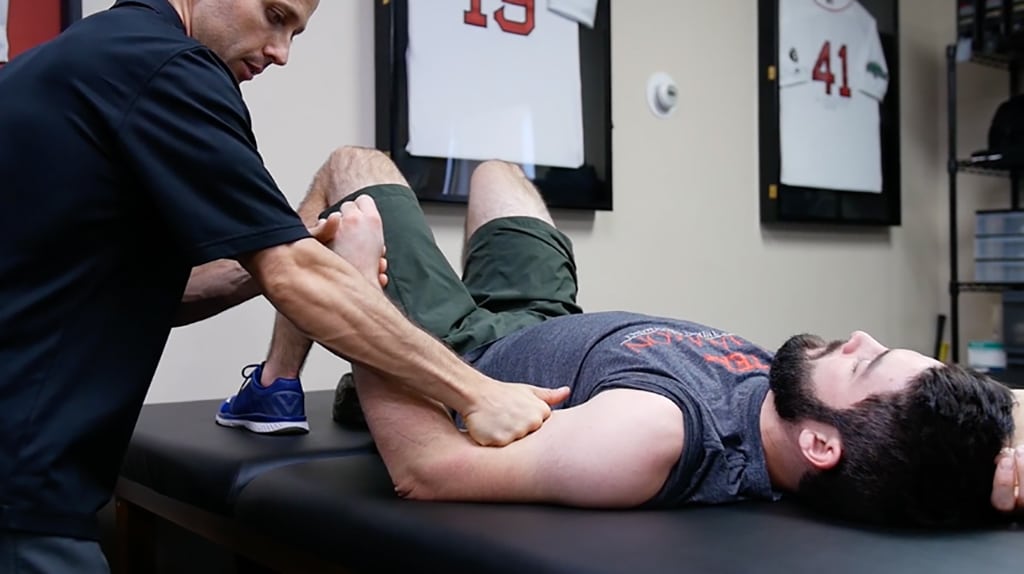
Looks like the votes are in and I would say that I am a little surprised with the results of my poll on what manual therapy techniques are most commonly used.  If you didn’t see my past post and poll on popular manual therapy techniques, you may want to go back as there was many great reader comments.

The two most commonly used techniques were muscle energy (MET) and myofascial release (MFR).  Out of curiosity, were you referring to actual MFR techniques as instructed by John Barnes or more that you just picked up the concept along the way and use it?  I didn’t expect MFR to be so high on the list.

Considering that many of these techniques can be learned from Leon Chaitow’s excellent books (that come with technique DVDs to learn from) on muscle energy techniques and positional release, it looks like this might be a great starting place for those looking to enhance their manual therapy skills.  I couldn’t agree more and recommend these books.

Also of note, 12% of people responded that they performed the Graston Technique.  Interesting, but if you combine all the instrumented soft tissue mobilization techniques (Graston, ASTYM, and SASTM), over 20% of people use instruments in some manner.  I’m not a big fan of these expensive courses and ultra expensive tools, as an educator myself I just think that this is unnecessary.  My thoughts and suggestions would be to either go to the Graston or SASTM course and find some cheaper tools on the internet such as Gua Sha tools or the Starr Tool.  Think about it, expensive tools are close to $3000.  You can get some good quality tools for under $200 and many from under $10.  I am sure I’ll get some heat for these comments, and I am sure that the official tools are much better quality but 600x better ($3000/$5)??? 

Same thing for Active Release Techniques (ART), which 18% of people said they utilized.  Great concept and certainly not rocket science, I bet we are all using these techniques already and not calling them ART (would “fake” ART be called “FART?"  Sorry I couldn’t resist…), but shame on you for charging so much for these seminars!


image

Bottom line for me is simply that if you don’t care about the self promotion of a full certification in these techniques, you can do your clinical practice wonders without going broke by reading Leon Chaitow’s books and taking a Graston or SASTM course to get the concepts and going the cheaper route on instruments, if that’s your thing.  Then after some experimentation, you can figure out what technique(s) are working for you and seek out further education or certification.

I’m expecting negative comments here, but just my thoughts.  I think that taking these full certification routes is an outstanding opportunity, but for many people it just isn’t an option for various reasons.  There are other ways to get great manual therapy skills and like many of you commented on the previous post, the best skill set is likely a combination of many techniques. 

Sign Up for Mike's FREE Newsletter!
Name
Email

imageThe concept of barefoot running is getting a lot of interest lately as well as a lot of debate on running and medical forums. It is certainly not a new concept and running shoe companies have been catering for the so called minimalist runners for many years. The recent publication of the book, Born to Run ignited a lot of interest in it.  In this post, Craig Payne shares some thoughts on the advantages and disadvantages of barefoot running.  What do you think?


The Barefoot Running Controversy

The benefits that are claimed for barefoot include increased foot strength, which is based on the claim that running shoes weaken muscles, that no research has shown; improved running biomechanics, which the research has not shown despite claims by barefoot runners (all the research has shown is that barefoot running is different to shoe running, not better); reduced injuries, which has not been shown by the research and a quick look at barefoot running blogs and running forums show a lot of runners seeking advice for the inquires they got while running barefoot.

image Particularly common in barefoot runners is what has become known as ‘top of foot pain’ and metatarsal stress fractures. None of this means that barefoot running is not good, it’s just the claims made for it are not supported by the research in the way that those who make the claims like to think.

Many in the barefoot running community also claim that running shoes are evil and are the cause of many of the running overuse injuries that occur. Again, there is no evidence that this is actually the case, yet you can often see research quoted that they claim shows this. On closer inspection, the research does not actually show what is claimed. There is no research that running shoes help either. That does not mean they are bad, it just means that no one has yet done the research.

Elite runners and elite triathletes look for every edge that they can get and none of them run barefoot. Some do incorporate barefoot drills into their training, but do distance themselves from many of the claims for barefoot running. Even the elite African runners who grow up barefoot, choose to use running shoes. You often see statements about Abebe Bikala winning the 1960 Olympic marathon barefoot, but he went on to break a world record wearing running shoes in the 1964 Olympics. You often see statements about Zola Budd competing in the Olympic 1500 meter barefoot, but she started to get a number of injuries and had to resort to running shoes to prevent the injuries.


Bottom Line is that We Need More Research

Personally, I don’t have a problem with the concept of barefoot running. What I have a problem with is the somewhat religious fanaticism that some in the barefoot running go about with the claims they make and the misuse, misquoting and misrepresentation of the research that they make use of to claim to support their cause. Barefoot runners are not unique in this approach and others such as Pose and Chi runners make similar nonsensical claims.

My belief is that there is not one running style, technique or method that suits all runners and it’s up to the individual. Claims for the benefits of any running approach need to be carefully evaluated and not taken at face value and the research checked to see if it actually show what is being claimed. There is even an anti-barefoot running website that critically analyses all the claims made by barefoot runners.

Comments from Mike: Sounds like there are definitely pros and cons, but until the evidence shows us otherwise, I’d lean towards running shoes.  What do you think?  Have you had an experience with barefoot running, either good or bad?  I know that I have seen a large increase in the amount of people wearing the Vibram FiveFinger product, any experience with this product?

image

PayneAbout the author: Craig Payne is Senior Lecturer in the Department of Podiatry at LaTrobe University in Australia and a moderator on Podiatry Arena where a lot of barefoot running topics get discussed.


Photos from istockphoto and wikipedia

Sign Up for Mike's FREE Newsletter!
Name
Email

Sphere Ad

Registration has begun for this year’s Team Concept Conference by the Sports Section of the American Physical Therapy Association.  This is a great course that I’ll be speaking at this year and has tons of great talks and speakers.  Plus, it’s in Vegas!  Dates are December 2-4, 2010.  Here is what the Sports Section is saying about the course:

Join practitioners on the leading edge of sports physical therapy at the 2010 Team Concept Conference! Clinicians from around the world will gather in Las Vegas to share their knowledge and experience with attendees. Intense lab courses, pre-conference sessions, an exciting vendor expo, and opportunities to talk with presenters one-on-one are all part of this year's conference.

Here are the speakers:

  • - David Altchek, MD
  • - Mario Bizzini, PT, MS
  • - Jaynie Bjornaraa, PT, PhD, MPH, SCS, ATC, CSCS
  • - Mark DeCarlo, PT, DPT, MHA, SCS, ATC
  • - John DeWitt, PT, DPT, SCS, ATC
  • - Terry Grindstaff, PhD, PT, ATC, SCS, CSCS
  • - Marty Huegel, PT, MEd
  • - Walt Jenkins, DHS, PT, ATC/L
  • - Mike Kordecki, PT, DPT, ATC
  • - Andre Labbe, PT
  • - Henning Langberg, PT, PhD, SSPT
  • - Rob Manske, PT, DPT, Med, SCS, ATC, CSCS
  • - Keith Meister, MD
  • - Stephen Nicholas, MD
  • - Phil Page, PT
  • - Russ Paine, PT          
  • - Mike Reinold, PT, DPT, SCS, ATC, CSCS
  • - Teresa Schuemann, PT, DPT, SCS, ATC, CSCS
  • - Danny Smith, PT, DHSc, OCS, SCS
  • - Tim Tyler, PT, MS, ATC
  • - Mike Voight, PT, DHSc, OCS, SCS, ATC
  • - Kevin Wilk, PT, DPT

Visit the Sports Section’s website for more information.  Should be fun.

Sign Up for Mike's FREE Newsletter!
Name
Email

In response to my post on the best career advice for students and new graduates, many people have emailed me asking for more information.  I like informative posts like this too and was excited to receive the below post from Cody West, PT of OrthoBuilder.com.  Cody put together a list of the top 5 habits of top rehabilitation professionals.  It’s a pretty good list and a great complement to the advice given by some of the top experts in my past post.

Habit 1: They Have a Hunger to Learn

clip_image002

In life, successful people never stop trying to learn new things, and that goes the same for top rehab professionals. John Maxwell in his book Talent Is Never Enough, says that successful people view learning differently and are open to new ideas. They never accept the status quo. Top rehab professionals do not accept that the approach they learned is the only approach in addressing a patient’s problem.

Wainright and others in their study of therapist’s use of reflection in learning and application to clinical decision making found that more experienced therapists used a reflection-on-action process than novice therapists.

Practicing evidence-based physical medicine requires an attitude of humility. Stanley Harris, an American journalist wrote, “A winner knows how much he still has to learn even when he is considered an expert by others. A loser wants to be considered an expert by others, before he has learned enough to know how little he knows.”


Habit 2: They Are Rooted in Biomechanics

clip_image004Top clinicians are able to use significant applications of biomechanics. I am afraid that we may have drifted too far from having to gain a solid knowledge of how the body moves and more in use of protocols or traditional approaches. I am not talking about fulcrums or knowing what a class 2 lever is. I am talking about knowing how to position a patient and instruct them on an exercise that isolates a specific joint action, fires a particular group of muscles or releases a tight muscle; an exercise that can’t be found in a software program.

Track coaches or weightlifting Godfathers of 30 years of experience don’t need a book. They can watch an athlete take a few jaunts or make a couple of lifts and can tell you exactly where the athlete needs improving.

Knowing how the lack of motion of a joint or weakness of a muscle will impact other areas of the body is paramount in our profession. Ever heard of ‘regional interdependence’?

Habit 3: They Know Principles Will Set You Free

clip_image006

Successful clinicians are not solely guided by protocols or a system they learned over the weekend but practice using principles. There are a lot of talented rehab professionals today that espouse a certain rehab system or approach to rehabilitation. These programs are great for serving as a guide for treating diagnoses that you are not familiar or help you address a problem patient. Not to mention some surgeons will not let you deviate from their protocols.

However, top clinicians also learn the principles behind the system or protocol and are able to make a customized clinical decision. Relying on protocols or a system will constrain your creativity and ability to make sound clinical judgments.

Protocols or systems are good for implementing solutions in a box whereas innovation is creating an approach to a patient’s problem outside the box.

Following the principles that other master clinicians present in a seminar or DVD and adding a tweak may open a whole new world.

Habit 4: They Are Cross-Pollinators

clip_image008

Successful clinicians are able to ‘cross-pollinate’ or mix ideas. Tom Kelley in his book, The Ten Faces of Innovation says that Cross-Pollinators are able to make connections or associations between principles that are seemingly not related. They are able to integrate ideas from outside industries to improve their current course of action or product. They are able to apply a principle or technique to a different situation. They are not afraid to mix ideas.

When was the last time that you learned a technique or exercise and applied it to another part of the body other than what how it was taught? When did you read about a study in a non-physical medicine journal and ponder how it can apply to your patient?

Habit 5: They Integrate Intangibles

clip_image010Jules Rothstein puts it succinctly, “Clinical expertise is a property that is held by all physical therapists who practice effectively; though they might not be able to define "clinical expertise," they can demonstrate it. Among the characteristics of the clinical expert is, I believe, the ability to identify relevant patient attributes, taking into account not only the examination findings but the values and culture of the patient, attributes that can be used to guide patient management and the application of evidence. In many ways, it is the behavior of the physical therapists that takes them beyond the level of automaton and allows for the integration of evidence and science into the humanistic practice that has been the hallmark of physical therapy since the profession began.”

References

Wainright SF, Shepard KF, Harman LB, Stephens J. Novice and Experienced Physical Therapist Clinicians: A Comparison of How Reflection Is Used to Inform the Clinical Decision-Making Process. Phys Ther. 2010; 90:75-88.

Rothstein JM. Editor Notes: The Difference Between Knowing and Applying. Phys Ther.2004; 84: 310-311.


Photos from istockphoto.com

Sign Up for Mike's FREE Newsletter!
Name
Email

image Have you ever considered that the clavicle is the “key” to shoulder function and our ability to throw?  I haven’t either, but it is in a way!  Scientist studying the evolution of the human shoulder point to the development of the human clavicle as the key development in the evolution of the shoulder.

In a nice little article by NPR, Anthropologists, anatomists, and archaeologists all comment on the evolution of the shoulder and the development of the ability to throw.  They describe the transition from the clavicle position of ape’s, which is great to hang from a tree, to the current human clavicle that excels at allowing extreme motion and the ability to throw objects.

Pretty interesting and something I thought would be good to share.  Click the link below to read the whole article or watch the podcast below to learn more.

Evolution of the Human Shoulder


Photo from Wikipedia

Sign Up for Mike's FREE Newsletter!
Name
Email