
Is a MRI Accurate in Detecting a Lumbar Disc Herniation in a Patient with Low Back Pain?

ResearchBlogging.orgLow back pain may be the most common diagnosis seen in doctor and physical therapy clinics.  How about this for statistics from an article published by the American Academy of Family Physicians:

  • Low back pain is the 5th most common reason for all physician visits.
  • Low back pain is responsible for more than $20 billion annually in direct health care costs.
  • In the United States, approximately 90% of adults experience back pain at some time in life.
  • 100% of people writing this post (OK, me…) are currently experiencing low back pain.  Seriously, I have had a bad few days…
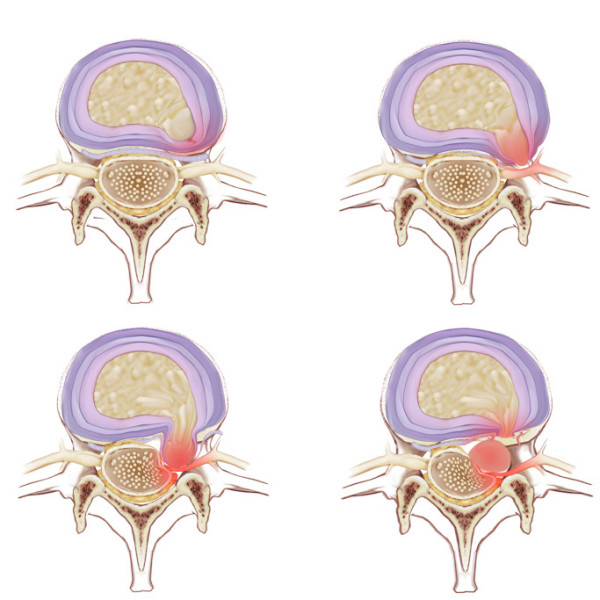
This is why I found an new research report published in the Journal of Orthopedic Surgery and Research on the accuracy of MRI in detecting lumbar disc herniation.  Surprisingly, there are few articles in the literature o the accuracy of MRI for patients with low back pain.   The authors prospectively evaluated the MRI’s of 50 patients undergoing open lumbar microdiscectomy.

They found MRI to be 72% sensitive, 68% specific, and 70% accurate in detecting containment status of lumbar herniated discs.  More specifically 28% of patients that showed a disc herniation on MRI actually did NOT have one during surgery.  Conversely, 33% of patients with a negative MRI actually had a herniation.


Clinical Implications

I must admit that these results are surprising for me.  Maybe this is why there appears to be such a high volume of asymptomatic people with lumbar disc herniations.  I never think that MRI’s are perfect but being wrong 30% of the time seems high to me when the results have a significant impact on surgical decision making.  Luckily low back pain tends to respond well to conservative treatment.  This study only further supports the use of physical therapy in an attempt to treat low back pain nonoperatively.

This study also stresses the point that we should never treat a MRI and should always base treatment on the patient’s symptoms and the results of a thorough examination.   Here are a couple more free online articles on the topic that I have found:

A question for those readers who are trained in a certain diagnostic method (i.e Maitland, McKenzie, etc, or even better, more than one type of training) – do you feel that a specific approach has been more accurate in diagnosing disc herniations that will not respond to conservative treatment?   What has been your experience?

Bradley K Weiner, Rikin Patel (2008). The accuracy of MRI in the detection of Lumbar Disc Containment Journal of Orthopaedic Surgery and Research, 3 (1) DOI: 10.1186/1749-799X-3-46

Learn More From Mike - FREE Newsletter!

Subscribe to my free newsletter now to learn a ton more and received 3 free gifts: A 36-page eBook "Solving the Patellofemoral Mystery," a 30-minute webinar "What's New in 2010," and my updated accelerated rehab protocol following ACL reconstruction.  I hate spam as much as you, your email is never sold or shared!

Other Related Articles:

11 Responses to “Is a MRI Accurate in Detecting a Lumbar Disc Herniation in a Patient with Low Back Pain?”

  1. Well, were do I begin? First, let me say best wishes for a speedy recovery…if you are in the Chicago area and need some help on this one, look me up. Second, that I am certified in Mechanical Diagnosis and Therapy (aka, McKenzie Method) and am currently a Diplomate level candidate (set to take the exam in 2009).

    As far as one method being more predictable at detecting HNP and annular competence. This has been studied by Donelson R, Silva G, and others. As a summary, it’s been stated that the MDT exam is about 90% as accurate as an MRI in detecting a disc lesion. Of those who peripheralize with all movements about a 69% have the chance of having positive discogram and about half of those will have a disrupted annulus. For those whom centralization occurs, about 74% will have a positive disogram, but 91% of those people will still have an intact annulus. I can confirm in clinical practice that those who truely worsen and peripheralize are very likely to have an exceptionally large HNP. Likewise, those with constant symptoms that do not worsen or get better, but have preserved movements are likely to have a complete sequestration. Both of these groups are easy to spot…the former often responding very well to surgery (or they return after a series of LESI and so much better upon return to PT) and the latter does better simply with time and education.

    Centralization has been cited as being a predictor for good outcomes.
    In clinical practice, I can confirm that predicting good results, however, are not as strong as predicting bad outcomes. This is consistent with the literature as described by Werneke…namely, that those who fail to centralize are more likely to have permanent disability than any other predictor (even more strongly than psychosocial “yellow flags.”)

    As far as diagnostics, MDT is moving away from the focus of a pathoanatomic source of pain. Although the IVD remains one of the core models, the focus is really on pain pattern predictions and one recognizes that MANY things can contribute to the pain experience. What MDT seeks to do, however, is to understand how the pain behaviors can direct us to appropriate treatment. This is in contrast to other pain classification systems such as those described by Fritz, Peterson, etc which seek to actually name a SPECIFIC pathoanatomic structure. However, the literature on this is quite weak…hence the change in the MDT paradigm.

    As far as treatment, you are right that the literature does not specifically identify that one “type” of exercise or treatment is more beneficial than the other. However, I would direct you to Audrey Long’s study “Does is matter which exercise?” The difference between this study and other studies is that they sought to homogenize the patient population by identifying those patients who had “derangement syndrome” and for whom a directional preference existed. What they found in this study was that those who were given direcitonal specific exercises got better faster and with essentailly no risk of injury when compared to those of general exercise or directionally opposite exercises. Long term outcomes were similar…but, there were many more dropouts or people who were worsened in the latter two groups. That being said, if directionally specific exercises can get my patient better faster (90% have significant relief in 2 weeks) and with little risk of injury, I find this much more compelling. What this also implies is that prior studies have failed to really identify homogeneous populations and may account for the current status of the literature.

    As an MDT provider, I can tell you I am familiar with many classification schemes…Butler, Peterson, Sahrmon, Fritz, etc. I sometimes use these to guide treatment if the MDT classificaiton does not seem to be directing me in the right direction…however, I can say that MDT is my first line of assessment and I can predict with confidence who will fail conservative treatment…no matter what their treatment and can refer them as appropriate.

    MDT is quickly being recognized for its predictive abilities. Within the last several months the WC board in North Carolina (I think), has decreed that all patients who are being considered for back surgery under WC are mandated to be seen by an MDT provider (as long as no red flags exist). Imagine that, being the “gate keeper” to surgery! The goal is to identify who really is a good candidate for surgery and who can be treated conservatively. Hooray for PT!

    Christie Downing, PT, DPT, cert. MDT

  2. Trevor Winnegge PT, DPT,MS,OCS,CSCS Reply December 1, 2008 at 6:10 pm

    Christie,
    Great post! I will first say that I am not officially certified in any one specific spinal treatment approach. However, through the years I have taken many courses in the treatment of the spine. In my practice I utilize mostly a Mckenzie based approach as you have outlined above. I also use Maitland and Mulligan techniques quite a bit as well. In terms of purely classifying disc based lesions, I use the McKenzie approach. I use a combination of all of the above for my treatments. As a faculty member in the ortho PT department at Northeastern University in Boston, We teach evaluation and treatment using all of the approaches. I find, like any other joint in the body, the more tools in your toolbox to help get the person better, the more effective you will be. Glad to hear that being MDt certified, you are still able to think outside the MDT box and utilize other approaches in the stubborn patient. Some people get tunnel vision and aren’t able to step away from what normally works, and the result is frustration for them and the patient, as well as potential unecessary medical procedures (ESI,etc).

    Regarding your comments on the Audrey Long study, I agree that past studies failed to homogenize their samples. Speaks to the extreme variability among presentation of LBP, making it very hard to homogenize. As opposed to a RC tear being classified by size of tear-pretty straightforward.

    Added to the difficulty in researching LBP is the varied motivation level of our patients with this problem. A young dancer versus a heavy laborer of 30 years is a stark contrast in activity and motivation levels. Throw in the fact that so many organs and other areas refer to the lumbar spine, it is really difficult to get that perfect research subject.

    There was a great study published by Borenstein, et al in the September issue of the Journal of Bone and Joint Surgery in 2001. This article was a 7 year follow up study of asymptomatic subjects who underwent lumbar spine MRI. They were looking to correlate positive MRI findings in the asymptomatic individual, with future episodes of LBP. They found no correlation-that subjects with more significant MRI findings had far less symptoms of LBP 7 years later. A very interesting study. Goes along with Mikes post on this new article pretty well. Another good study by Kleinstuck et al published in the Spetember 2006 issue of Spine tried to see if patients who underwent an MRI and had positive findings had a worse outcome in physical therapy than an individual with LBP who did not have an MRI. Great idea. The whole mind over matter debate. We have all had those patients that we have to coax a little bit harder to do their HEP because they “have a herniated disc”. People don’t realize that we as therapists put more stock in our own PT evaluation than an MRI of the lumbar spine.

    I am going to stop typing now before I need an MRI on my carpal tunnel.

    Great post once again Christie!

  3. Christie Downing, PT, DPT, cert. MDT Reply December 1, 2008 at 8:13 pm

    Thanks Trevor…

    I want to make two clarifications before the PT police come and arrest me.

    First, regarding Long’s study…long term results were similar for the general exercise group and the DP specific group…but not for the opposite to DP group. While some people in the opposite to DP group did get better, by far many of them worsened….

    Second, regarding the “gate keeper” comment…that the MDT therapist is looking for those being considered for surgery who might be able to be treated conservatively. I in no way was intending to say that PTs are making the decision as to who IS appropriate for surgery…only to identify who may have been previously missed as a conservative treatment responder.

    …I’ll have to read that Kleinstuck article.

  4. Jason L. Harris, PT, DPT Reply December 2, 2008 at 3:26 pm

    Great post Mike. I like your point about treating the patient and not the MRI. I don’t have the citations with me, but I’m sure many of your readers have seen the articles that show poor correlation between MRI and symptoms. Including one that showed those w/ HNP’s and those w/ only annular tears were both just as likely to have lower extremity pain.

  5. Wow, great response guys, thanks so much for sharing your experiences.

    Christie, your comments are very valuable. That is impressive to hear about WC, but makes sense. To me physicians tend to diagnose and elect surgery or not. It is our profession that exams, diagnoses, treats, adjusts exam based on treatment, diagnoses again, treats again, etc. We certainly should have a say in more medical related decisions as above, though I agree with your follow-up disclaimer!

    So MDT is accurate to 90% of a MRI, which is 70% accurate, so that makes MDT 63% accurate? I guess that is pretty good! You mention twice that you are more comfortable determining who will fail conservative treatment (how you do this sounds like a great guest blog post to me…email me…). My question for you is then, what do you do? Do you immediately refer out (and to who?) or do you attempt treatment anyway?

    I agree with Trevor’s comments that our skills should probably come from several different theories, it is great that you see that too Christie. I tend to find that one theory is really good at something and another theory something else. Putting them all together as tools could make us even better practitioners. Also, what is “LBP?” As Trevor puts it, it could be so many different things that any research study is going to have immediate difficult with this part of their methodology.

    Jason, thanks for posting, that is an interesting study. I was not aware, could you post the reference or link to pubmed? Who love to check it out. That too surprises me and has to make us wonder what exactly then causes LE pain? Sort of the somatic referred pain vs. radicular referred pain theories. Interesting.

    Thanks Christie, I’m feeling better, don’t tell anyone but I ranged from completely healed today to can’t get out of bed due to lumbar spasm last Wednesday all without treatment of any sort! I know, I am a bad example…

  6. Jason L. Harris, PT, DPT Reply December 5, 2008 at 2:45 pm

    Sorry Mike, haven’t been back in a couple of days. Here’s what I could find in my collection:

    Degree of Disc Disruption and Lower Extremity Pain – http://www.spinejournal.org/pt/re/spine/abstract.00007632-199707150-00015.htm;jsessionid=J5dF01Bkrnpbcpy0ynt7GQxTqjLRJrTyf6Gl8T5nL8pylvGmxCFH!273838506!181195628!8091!-1

    Great review article published Jan of this year titled: Intervertebral Disc: Anatomy-Physiology-Pathophysiology-Treatment.

    You can find the FULL TEXT version of the article here:
    http://www3.interscience.wiley.com/journal/119422359/abstract

  7. Thanks Jason! Especially like the free full text, always a plus. Guys, please check out Jason’s blog in my blog roll, it is a good read!

  8. I have to partcially retract a statement in my post regarding the w/c situation. Although MDT clinicians have been able to demonstrate improved outcomes via FOTO data collection and have been subsequently been able to arrange a higher rate of reimbursement in some areas, my statement about patient selection for surgery was premature. Apparantly, there is some discussion that if the FOTO data continues to be positive, that those under this particular HMO will be required to see an MDT certified clinican prior to seeing a spinal surgeon. It’s still in the works from what I understand from my MDT cronies.

  9. I have recently had agonising leg pain that end s at the knee. I have an MRI report that states the following:
    T2 sequences signal loss is present in L3-4, L4-5 and L5-S1 intervertabral discs due to degeneration.
    L3-4 bulging is detected, Thecal sac is compressed and both newral forminae are narrowed.
    L4-5 bulging, central and left foraminal protusion are detected. Thecal sac is compressed, L5 nerve roots are compressed at outlet, left neural foramina is narrowed and L4 nerve root is touched.
    L5-S1 right paramedian extrude herniation that migrates caudally. Thecal sac is free. Outlet of thecal sac and right lateral recess, right S1 nerve root is compressed, also left S1 nerve root is slightly compressed.

    I have had 2 different doctors opinions. I live abroad and so the very limited english I am being diagnosed in is confussing. What exactly does all this mean? A rough laymans explanation would be very gratefully recieved.

    One doctor has suggested surgery, straight away, which concerns me. Another has suggested muscle relaxants and complete bed rest for a week before he makes any further decisions.

    Your expert opinions and this time would be gratefully recieved.

    Yours…. in varrying degrees of pain that shoots all the way to the knee, and ocassionally gives me a numb bum!!!

    Stacey

  10. Stacey, it wouldnt really be a good idea for people to give medical advice, nothing wrong with getting a 3rd opinion, 2 will have to agree! Good luck.

  11. Just took part C with Mark Miller, "Cool Stuff".
    M

Leave a Reply

*

 Subscribe to Mike's FREE Newsletter and Learn More! 

Notify me of followup comments via e-mail. You can also click here to subscribe without commenting.