
The Use of Glucosamine and Chondroitin Sulfate for Knee Arthritis
A recent review from the January 2009 issue of the Journal of Arthroscopy reviewed the use of glucosamine and chondroitin sulfate for knee osteoarthritis. Considering the vast amount of people suffering from knee arthritis and the increasing cost of medical care for these patients, the use of any type of supplement to reduce symptoms is welcome.
Research into the efficacy of glucosamine and chondroitin sulfate is certainly not new with studies dating back to 1969. However, the literature has been filled with many poorly controlled studies, some of which were funded by glucosamine manufacturers!This particular paper reviewed the results of 23 studies that involved double-blind, placebo-controlled, randomized control trials as well as several meta-analyses.
The effectiveness of Glucosamine and Chondroitin Sulfate
The overall results of the review show that there are inconsistent results, but that the results do favor improvement of pain and joint function in patients with arthritis. The authors also note that one of the most consistent trends between studies involved the length of use of the supplement. The best results from glucosamine appear to occur after several months of use. Studies are referenced that show positive results in 3-6 months and even up to 9 months.
In general, if you looked hard enough, you could probably find more articles that say that the use of glucosamine is effective than you could find saying it is not effective. I realize and agree that there is not overwhelming evidence in support of glucosamine or outlined the exact mechanism of symptom improvement. However, when we start to run out of options for our patients, I would say there is enough evidence to support it’s use, as long as the supplement is safe.
The Safety of Glucosamine and Chondroitin Sulfate
A potentially more important finding of the current review was that the use of glucosamine and chondroitin sulfate appears to be safe, at least as safe as placebo supplementation. To me, this is the most important finding for me clinically. If we are going to recommend the use of a supplement with inconsistent findings, as long as the supplement is safe I have no problem recommending a patient try glucosamine.
Recommended Use of Glucosamine and Chondroitin Sulfate
I have spent a lot of time over the last several years trying to find a consensus statement on the use of glucosamine and chondroitin sulfate. Unfortunately, this does not appear to exist. I have taken information from many sources, including the excellent recommendations of noted orthopedist Dr. Frank Noyes of Cincinnati Sports Medicine and information from the Osteoarthritis Research Society International to provide the following information. I recommend that you read Dr. Noyes’ recommendations, it is a great resource. Also, realize that you should consult with your own personal physician before taking any supplements and that glucosamine may not be indicated for you personally. The below information are just basic guidelines for healthcare providers when considering the use of glucosamine:
Glucosamine should be taken with chondroitin sulfate to maximize it’s effectiveness- Supplements that include magnesium and vitamin C may help the absorption rate of glucosamine and chondroitin sulfate.
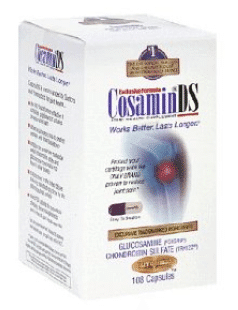
- To date, the specific brand that has received the highest recommendations appears to be Cosamin DS.
- Dosage should vary based on body weight:
- If less than 120 lbs: G 1000mg + CS 800mg
- Between 120-200 lbs: G 1500mg + CS 1200mg
- If greater than 200 lbs: G 2000mg + CS 1600mg
- Supplements should be taken for at least 3 months for noticeable results. If no response within 6 months, may discontinue.
I have found decent results from the use of glucosamine in my patients, have you?
C VANGSNESSJR, W SPIKER, J ERICKSON (2009). A Review of Evidence-Based Medicine for Glucosamine and Chondroitin Sulfate Use in Knee Osteoarthritis Arthroscopy: The Journal of Arthroscopic & Related Surgery, 25 (1), 86-94 DOI: 10.1016/j.arthro.2008.07.020
Image by scottfeldstein


February 2, 2009 


Haven’t researched it as you but have long heard of it’s positive effects.
Part of our job is education – too many times people look to others to make healthcare decisions for them so if we can educate our patients to give them appropriate options – now they are in the position to make an informed decision.
I am of the mindset that if something helps “you the patient” and it is safe, then go ahead. Science obviously has a role but psychology does play a part as well and if we can get people to the point of having a different outlook (through the use of supplements, etc.) then all the better.
Considering our other options for arthritis, the phrase “why not” comes to my mind Bill, I agree.
I am always surprised by how many patients with knee OA have not been told about glucosamine. However, whenever I talk to a patient about it, I’m worried I might be putting myself at risk regarding scope of practice. Mike, do you just recommend they talk to their MD about it? (I practice in MA also)
i think one of the constraints to using glucosamine is cost. It is definitely not cheap. I usually advise patients that it certainly won’t hurt them and may help them. Tell them to be on the lookout in sunday papers for various drugstore flyers. CVS, walgreens, rite aid, etc often have the bottles at a buy one get one free discount. Otherwise, the cost can add up quickly!
goerge,george@gmail.com, http://www.rainbowwellbeing.com
I think that Glucosamine which is made by raw materials, is quite beneficial for healthy joints .And i have found some more effective products at Rainbow
Wellbeing (www.rainbowwellbeing.com).
Chris, I always pose it that way, the old “you should consult with your general internist, but this may be of help to you…” type of comment.
Why is it so expensive anyway???
I heard mixed results with Glucosamine. I think it may be due to an individual's ability to absorb the supplement(s) or the quality of the supplement. I read on numerous occasions that 90% of the supplements on the market are poor quality. I tend to advise basic good nutrition first (water, EFA's, fruit&veggies, antioxidants), then specific targeted response supplements. Something else I've heard was to be careful using Chrondroitin in individuals with high PSA levels.
good thoughts david, thanks
hi mike,
as a physical therapist are you allowed to recommend glucosamine in your practice? or are you talking of patients taking glucosamine + physical therapy.
are you in extended scope practice.
satyajit
india
http://www.physioindia.blogspot.com
Satyajit, see above comments.
The problem is with Chondroitin. From most of the research I have seen there are questions concerning whether chondroitin can be absorbed orally. Many sources say that it can’t be. It may be more beneficial to just buy a glucosamine only supplement or one with MSM also. Proteolytic enzymes and fish oil help alot also.
I have also read about the issue with chondroitin. Also, I found (I believe on the natural standard webpage) that it is important to use the sulfate and not HCL variety as glocosamine HCL has been shown to have a negative effect (worsening of symptoms) in some cases. (Though it is inconsistent.)
Mike, great article. One comment on your last bullet point. The orthopedist who taught our classes during school had a recommendation of try it for 6 months, stop for a month, and then see if you think it was working. His point was that the benefits may take time to kick in and you may not notice it until you stop. It may only be a slight difference, but it makes sense to me to determine the effect after you stop taking it.
Great point, Mike. Glucosamine Sulfate is what most of the reputable studies utilize. I always recommend patients interested in Glucosamine obtain Sulfate rather than HCL.
Many years ago, Dr David Williams pointed to a study which showed that Chondroitin suppplements can accelerate early stage prostate cancer.
If you are not at risk for early stage prostate cnacer, then chondroitin may be safe for you. But how do you know pour risk ?
DrR David Williams reccommended shifting supplementaton from Glucosamine sulfate/ chondroitin to a safer form :
Glucosamine sulfate/ MSM.
These supplements are also available in Costco at substantially lower prices than in the CVS – Walgreeen stores.
Hi Mike, thanks for this article. And, to the comments about PSA levels with chondroitin , I never knew about that. Has anyone ever looked at Veterinarian studies – it seems like first line of defense always for dog knee injuries and/or aging dogs.
Mike & All,
With the expense of this supplement and the equivocal evidence in the literature and the prolonged use before any discernible effect can be determined; “why not?” should instead be “what for?!” The is much better evidence for the proper use of acetaminophen for more rapid pain relief. If a patient has expendable income and thinks it helps them, then I’m not going to discourage them, but I never recommend it as an effective supplement – even with a “why not?”.