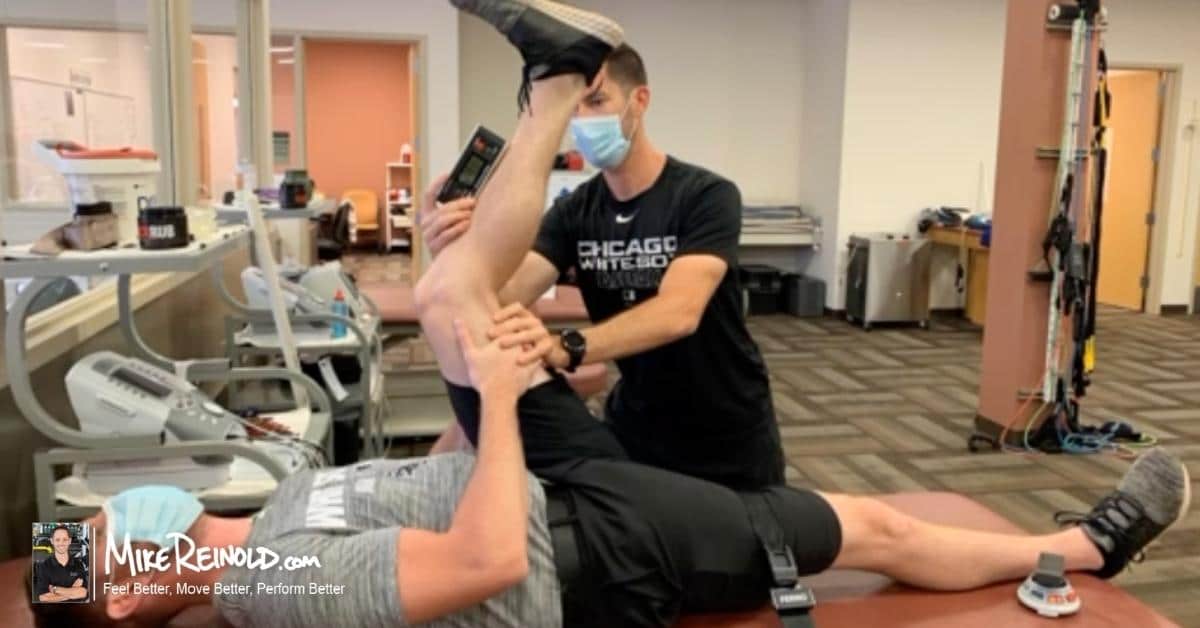

Identifying Early Signs and Symptoms of Adhesive Capsulitis

image In my opinion, one of the most challenging disorders of the shoulder to properly diagnose during the early stages is adhesive capsulitis, or frozen shoulder.  Let me explain that further – once a person has global tightness and loss of motion, this is a pretty easy diagnosis. 

But I often wonder if some of our patients with “shoulder pain” but not loss of motion may actually have stage one irritation of the capsule that could develop into adhesive capsulitis. 

If we can work with patients during this phase, maybe we can stop the process?  Maybe we can prevent severe loss of motion?  Unfortunately to date, there has been many anecdotal advice but no consensus on the clinical identifiers or early stage adhesive capsulitis.

A recent article in the Journal of Physical Therapy sought to develop a consensus among a group of experts regarding clinical identifiers for the first stage of adhesive capsulitis (Abstract here or if you are a subscriber of PT you can view full article here)  The author’s used the Delphi technique (more information on the Delphi Technique here) to poll a group of experts within the fields of rehabilitation medicine, physical medicine, orthopedic surgery, physical therapy, chiropractic, and osteopathy. 

After polling and statistical analysis, the authors report 8 factors that the group agreed upon as being strong clinical indicators of early stage adhesive capsulitis:

  • There is a strong component of night pain
  • There is a marked increase in pain with rapid or unguarded movements
  • It is uncomfortable to lie on the affected shoulder
  • The patient reports the pain is easily aggravated by movement
  • The onset is generally in people greater than 35 years old
  • On examination, there is global loss of active and passive range of motion
  • On examination, there is pain at the end range of motion
  • There is a global loss of passive glenohumeral joint movement

These factors were all selected and narrowed down from an original list of 60 items that is included in the manuscript.  I thought it was interesting that many of the clinical identifiers that I use did not make the final consensus.  For example, none of the below reached consensus:

  • The onset is generally in people less than 60 years old
  • The condition more commonly presents in females
  • There can be an association with diabetes

Perhaps these are stereotypes that I have used in my practice based on past anecdotal advice. 


Clinical Implications

The results of this study in no way should be used as strict criteria in the diagnosis of adhesive capsulitis, but may provide some useful guidance during the subjective and objective portions of your exam.  I would suggest integrating the above information into your examination. 

I always recommend that you carefully exam someone that comes to you with “shoulder pain”   to try to identify signs and symptoms of early stage adhesive capsulitis.  As we all know, this pathology can have severe complications on the individual’s functional status, anything we can do to identify and prevent the progression would be extremely helpful.


Walmsley S, Rivett DA, & Osmotherly PG (2009). Adhesive capsulitis: establishing consensus on clinical identifiers for stage 1 using the DELPHI technique. Physical therapy, 89 (9), 906-17 PMID: 19589853
Learn More From Mike - FREE Newsletter!

Subscribe to my free newsletter now to learn a ton more and received 3 free gifts: A 36-page eBook "Solving the Patellofemoral Mystery," a 30-minute webinar "What's New in 2010," and my updated accelerated rehab protocol following ACL reconstruction.  I hate spam as much as you, your email is never sold or shared!

Other Related Articles:

9 Responses to “Identifying Early Signs and Symptoms of Adhesive Capsulitis”

  1. Hi Mike,
    Nice review of this piece. There is a major oversight in my opinion, like how about the fact that nothing is noted about soft tissue palpation findings (such as density in the latissimus dorsi in axilla or subacromial edema) or that limited inferior and posterior joint mobilization is present. Those are the skilled care findings that a physical therapist or other health care provider should be assessing to confirm the subjective findings.

  2. Add 1 more for the diabetes train.

    What treatment techniques have you all found helpful for treating this case. I personally have only found extremely slow mobilizations to be moderately successful. I'll also recommend the patient perform (very) LLLD stretches at home. Interestingly, some "patented" soft tissue technique practitioners strongly advocate for the use of their therapy and although I, myself, am fully certified, I have NOT found it beneficial at all (I'm a DC and many of us are certified in this technique if you catch my drift). ;-)

    Secondly, although many of us aren't radiologists how many of you had good results with fluoroscopic injections vs distension arthrograms?

  3. Christie Downing, PT, DPT, Dip. MDT Reply October 19, 2009 at 5:31 pm

    Anecdotally, I confirm much of the list…particularly, the night pain, inability to lay on the shoulder, and increase in pain with all motions.

    I'll also add that the pain is present less than a few months and that ROM is limited by PAIN, and not yet by restricted tissue.

  4. Thanks for posting the article. I thought it was a pretty good study with some good info when I read it as well. I would also agree with your identification of diabetes. There is a tie, I also believe with diabetes. I think the sugar changes with diabetics and the tissue changes have a role in this.

    Also Christie, I would agree that Pain is a major factor and our ever growing understanding of pain and neural response will only help with our management of these patients.

  5. I'd like to add to Jeff's comment/ question. Have you found that an fluroscopy guided intraarticular injection during the "freezing phase" assist the patient in moving past the "frozen phase" into the "thawing phase"? I have found if they sought attention early (and lucky enough to get in) they do well.

  6. @ JB – I agree that this is a common symptom that I see as well. Remember that this study just polled a large group of “experts” and came up with a collective group of signs and symptoms. Many of the items you mention were included in the study but did not reach consensus.

    @ Christie – I like your comment on pain less than a few months.

    @ Scott – I agree. I am starting to lean towards the thought that patients have adhesive capsulitis for much longer than we all realize before they actually seek attention. If you can do anything to break the inflammatory process, such as you suggest, you may potentially decrease the duration.
    This comes down to a state of mind for us clinicians – next time you see a patient with “shoulder pain” that you are treating for “impingement” etc., stop and think if it is possible that this is just very early adhesive capsulitis.

  7. Lighthouse Career Agents Blog Reply October 23, 2009 at 10:59 am

    Check out this excellent article on how Physical Therapists need to be part of the Healthcare Reform Equation. http://www.lighthousecareeragents.blogspot.com

  8. I came across your blog while searching googling "adhesive encapsulitis severe night pain." I'm a 50 yr old RN, just diagnosed, and I can personally vouch for every one of your points above. I thought perhaps this wicked night pain had driven me to hypochondria because I am typically quite stoic. This, however, has driven me to tears a few times.

    I began having mild symptoms about 4-5 mos ago. Ever the optimist, I was just sure it would go away (in my dreams!) and knew it had to be related to tugging on patients. About a month ago, the pain became constant (mild to moderate still, unless there was sudden movement –> severe pain), ROM was decreasing, and it was painful when I tried to *make* myself move more.

    I've had x-rays and an MRI and am eating Motrin like M&M's as I await my appointment next Monday to see what the plan is… I do still try to move my arm as much as I can. but the pain is what prevents it. I don't know how much of the restriction is actually caused by the inflammation, but the pain is what stops me when and my ROM is decreasing more and more.

    Have any of you had patients with this who also c/o pain that radiates down the arm, into the elbow and hand as well? I've had major abdominal surgery twice and this pain at night rates right up there in its own way. No wonder I'm still awake at 2am and looking for answers, huh? God bless you all for what you do – hope I have a therapist as interested in this as you all are.

  9. Dear Oldnight nurse,

    You are probably past the early stage and have moved on to actual loss of motion. Some people call this the "frozen" stage. It's relatively easy to identify this group with a clinical exam (in my opinion anyway) because the loss of motion is so compelling.

    Mike is specifically referring to the early stage (or freezing) where the diagnosis becomes less clear. Patients are often misdiagnosed has having "bursitis", "impingement syndrome" "tendonitis". These patients are often sent to physical therapy where it really just gets worse. Aggressive range of motion at this early stage really does nothing but to make it more inflammed. So here's where it becomes a little less clear as to what to do. Should we just wait and let things settle in and calm down, or is there a real solution we can offer this early stage group without making it a whole lot worse?

    Don't get me wrong though, frozen stage can be just as frustrating. Anecdotally, I find 1-2 sessions good soft tissue work helps this group prior to resuming range of motion. But they are in for an arduous course of care…some of which the literature contradicts. It's been suggested that no therapy is just as good as treatment…but thats not a comfort to most patients.

    As far as your questions about pain radiating to the hand. Many will argue that shoulder related pain, and espeically numbness and tingling cannot be realted to shoulder disorders. I would anecdotally disagree. A good inflammed shoulder can certain make that pain drop below the elbow. And many people with rotator cuff tears experience numbness and tingling…it's just not in a pattern like is does for a pinched nerve (ie, cervical in origin).

    Well, that's my two cents, anway. Good luck Ms. RN. Hang in there (no pun intended)

Leave a Reply

*

 Subscribe to Mike's FREE Newsletter and Learn More! 

Notify me of followup comments via e-mail. You can also click here to subscribe without commenting.