
Epicondylitis and Cervical Radiculopathy

image Have you ever had a patient or client with unrelenting medial or lateral epicondylitis?  Someone that has had symptoms off and on for months, maybe even years?  I think we all have.  I learned a long time ago after I was frustrated with my first few epicondylitis patients that many times epicondylitis is actually being caused by cervical radiculopathy.

A new study published in the journal Sports Health sought to estimate the actual prevalence of medial epicondylitis among patients with cervical radiculopathy.  The authors evaluated 102 patients with documented cervical radiculopathy and found that more than half (55 to be exact) also had medial epicondylitis.  None of these patients had a documented cause of the epicondylitis.  The vast majority (80%) of these patients had C6 and C7 radiculopathy, the remaining 20% had C6 radiculopathy.
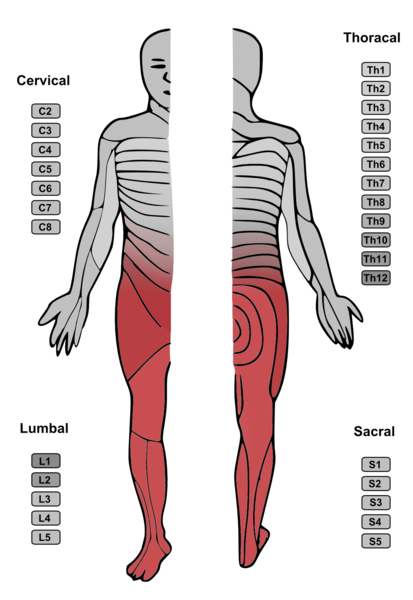
image These findings make a good argument for radiculopathy being a potential cause of epicondylitis and I think that the results can be extrapolated for lateral epicondylitis.  If muscle weakness or imbalance occurs to the wrist extensors and flexors, which are innervated by C6 and C7, overuse and eventual tendonopathy are likely to occur.  This could be a very large reason why epicondylitis has traditionally been such a challenging pathology to treat.  We can treat the symptoms but will not make any lasting gains without treating the source – the neck.

Based on this, I would suggest that we all make it standard practice to clear the cervical spine when we are evaluating patients with epicondylitis.

The results of the study are very interesting and make sense clinically.  There is a limitation of the study that should be mentioned.  The authors evaluated the percentage of patients with cervical radiculopathy that also had medial epicondylitis.  I am actually more interested in the reverse, the percentage of medial epicondylitis patients that have cervical radiculopathy.  But, a good study nonetheless. 

What do you think?  Have you noticed a correlation between epicondylitis and cervical radiculopathy?


Photo credit

Learn More From Mike - FREE Newsletter!

Subscribe to my free newsletter now to learn a ton more and received 3 free gifts: A 36-page eBook "Solving the Patellofemoral Mystery," a 30-minute webinar "What's New in 2010," and my updated accelerated rehab protocol following ACL reconstruction.  I hate spam as much as you, your email is never sold or shared!

Other Related Articles:

16 Responses to “Epicondylitis and Cervical Radiculopathy”

  1. I think you miss a huge piece of the puzzle if you are not screening the spine with peripheral, overuse injuries. Whether its epicondylitis of the elbow or a patellofemoral disorder, you should always clear the spine.

  2. So would you prefer to add manual or mech. txn if it is true rad. pain from the cx spine? How soon would you expect to see benefit from removing the stressor – that visit, or next visit? I assume if it's really chronic it will take a little while to calm the inflamm. tissue down.

  3. Harrison Vaughan, PT, DPT, Cert. SMT Reply July 19, 2010 at 10:17 am

    You're right Mike. I do think the cervical spine is highly involved in not only elbow pain but carpal tunnel and more often than not co-exists with shoulder pain. This is also true for the low back and knee pain, etc.

    Cause and effect treatment (work on the neck and bam, no symptoms…its the neck!) works well with these type of "uncertain" diagnoses to determine the origin of symptoms. It clears the clinician's mind that he/she covered all bases and the patient usually feels more comfortable too.

  4. I find it interesting that if a PT says "clear the cervical spine" for an elbow condition – it is generally well perceived. If a chiropractor does this…well that's just the dogma based on the claim that all disease emanates from the spine. Unfortunately this issue of cultural authority is a boundary for far too many people, specifically patients.

    ALL peripheral entrapment presentations should be evaluated this way…it only makes sense to check the entire path of the involved nerve.

    Rarely will there be any somatic dysfunction without some component of soft tissue dysfunction. While SMT can have anti-spastic effects, as well as modulation of the afferent input – without some muscle therapy there is a considerable chance the issue will return to some degree.

  5. Interesting you bring up this issue, i currently have a patient with a diagnosis of medial epicondylitis. He did not respond to PT/OT for 4 months, MRI of the elbow later confirmed the above dx. After discussing this dx with the referring MD, i suggested that he get an EMG to rule-out C-spine involvement. Sure enough he had a C6-C7 radiculopathy on that side and some mild atrophy in the hyperthenar eminence. I started some nerve glides and STM to UT/Levator/Scalenes and manual traction. FYI, he only gets his pain/paresthesias while sitting at PC at work. Any other ideas?

  6. Christie Downing, PT, DPT, Dip. MDT Reply July 19, 2010 at 7:04 pm

    So Mike…

    Do you think these are "true" cases of medial epicondylitis…or simply misdiagnosis? I would argue that the latter is more common…

  7. Nicolás Sepúlveda Reply July 19, 2010 at 8:29 pm

    Humbly, i would suggest reading Mulligan's Manual Therapy and the masterclass by Prof. Bill Vicenzino "Lateral epicondilalgia: a musculoskeletal physiotherapy perspective" Man. Ther. 2003;8(2):66-79. In both of those documents they explain the techniques and the rationale behind the movilizations of the cervical spine or the elbow. I've had really good results with this approach plus eccentric exercise!

  8. Hard to create a lot of dialogue with so many “anonymous” posters…

    @Anony2 – Traction would be helpful and is one of the few treatments with some efficacy for radiculopathy. How soon would depend on the extent and severity, could vary.

    @Anony3 – Can he stand at work?? Kidding… Posture education, if no resolution with tx – back to doc, thay may want to start steroid dose pack or give injection.

    @Christie Downing – I still think this is medial epicondylitis, but secondary to the neck. The epi is real and likely from overuse of weakened muscles. You need to treat the elbow, but if you don’t treat the neck too, the elbow wont get better. Similar to secondary impingement of the shoulder, you still treat the impingement but need to work on the cause of results wont last.

    @Nicolas – agree with your references

  9. Chad Ballard, PT Reply July 20, 2010 at 3:15 pm

    Mike… Great info as usual. Cleland had a study in JOSPT in 11/2004 that showed lateral epicondyalgia patients required fewer visits if manual therapy included (my personal favorite for these folks is a CT manip). Also like the Mulligan MOBs as previously mentioned.

    http://www.jospt.org/issues/articleID.394,type.2/article_detail.asp

  10. Mike-
    I definitely see this trend and also usually treat both entrapments, especially with my golfers. Many of my patients have chronic facet and possibly disk issues in addition to repetitive "elbow" itis.

    I have had a lot of success after treating C/T junction. I see significant grip test gains and reduction in elbow symptoms. This is with most of my patients presenting with both symptoms (often undiagnosed radic symptoms fitting the radic cluster that were referred for elbow tendonopathy).

    Of course following this with improving thoracic mobility and scap / cervical stab is essential for "elbow" patients. Thanks for the great post!

  11. Harrison Vaughan, PT, DPT, Cert. SMT Reply July 21, 2010 at 6:01 pm

    To add to my prior response, I do think it is the clinician's responsibility to open up the differential diagnosis to consider entrapments proximal to the current site. It may not be purely neurogenic at times, but we should keep in mind the 'double crush' syndrome. We typically do not see the patient in time anyway until multiple regions are affected making this more reasonable.

    Based on the anonymity response concerning chiropractors and physical therapists' background in origin of symptoms, I do think we (most of us are PTs) should respect that DCs have been around for awhile and are typically "chosen" before us for musculoskeletal care (back and neck pain mainly). So, maybe they are on the right track with their treatments…
    …however, I do not think they are always on the right track with diagnosis concerning subluxations, adjustments, things out of place, etc. This may actually open up a whole different discussion (sorry if it does Mike!)

  12. Carson Boddicker Reply July 21, 2010 at 9:14 pm

    Harrison,

    I agree largely with your assertions regarding the chiropractic and PT communities. I have gone beyond the letters, and if you do good work and can support your rationale with some solid thinking and a little bit of evidence, I don't really care how you get it done. The issue I've seen, however, is that many of the "traditional" therapists particularly DCs who rely upon the subluxation model to treat certain areas without a strong or supportable rationale.

    The c-spine is an incredibly vital piece of the good movement equation.

    Regards,
    Carson Boddicker

  13. Theoretically, the relationship is highly agreeable. NOW, how to properly mobilize/stabilize is much more challenging. Do you start changing alignment in the pelvis? The feet? Let's just take C6-7 as an example. It's a transition zone, so particularly prone to dysfunction. MET to correct T-spine? MFR to the ground substance? Manips? (too bad I live in WA).

    I personally look at the pelvis first w/ almost all of my spine/referred pain patients. The whole foundation is important to me. What do you guys think?

  14. Kelly R. Hutson, D.C. Reply July 28, 2010 at 8:08 am

    " many of the "traditional" therapists particularly DCs who rely upon the subluxation model to treat certain areas without a strong or supportable rationale."

    As a practicing chiropractor, I couldn't agree with you more. Then again, any DC who wasn't interested in learning more and getting better at what we do wouldn't be found on this forum.

  15. Interesting point, Mike. Wise suggestion to make it standard practice to clear the cervical spine when evaluating patients with epicondylitis.

    Rick Kaselj
    http://www.ExercisesForInjuries.com

  16. Look for research on "double crush syndrome". The concept of proximal nerve irritation (even if subclinical) cause cause a distal nerve to be more excitable (ie. painful). Cool stuff.

Leave a Reply

*

 Subscribe to Mike's FREE Newsletter and Learn More! 

Notify me of followup comments via e-mail. You can also click here to subscribe without commenting.